
Table of Contents
Galactic Council Resolved to Exclude Earth: Humanity Grinned and Walked Away!
Video Courtesy of – HFY Velthara Sci-Fi
Video URL – Galactic Council Resolved to Exclude Earth: Humanity Grinned and Walked Away!
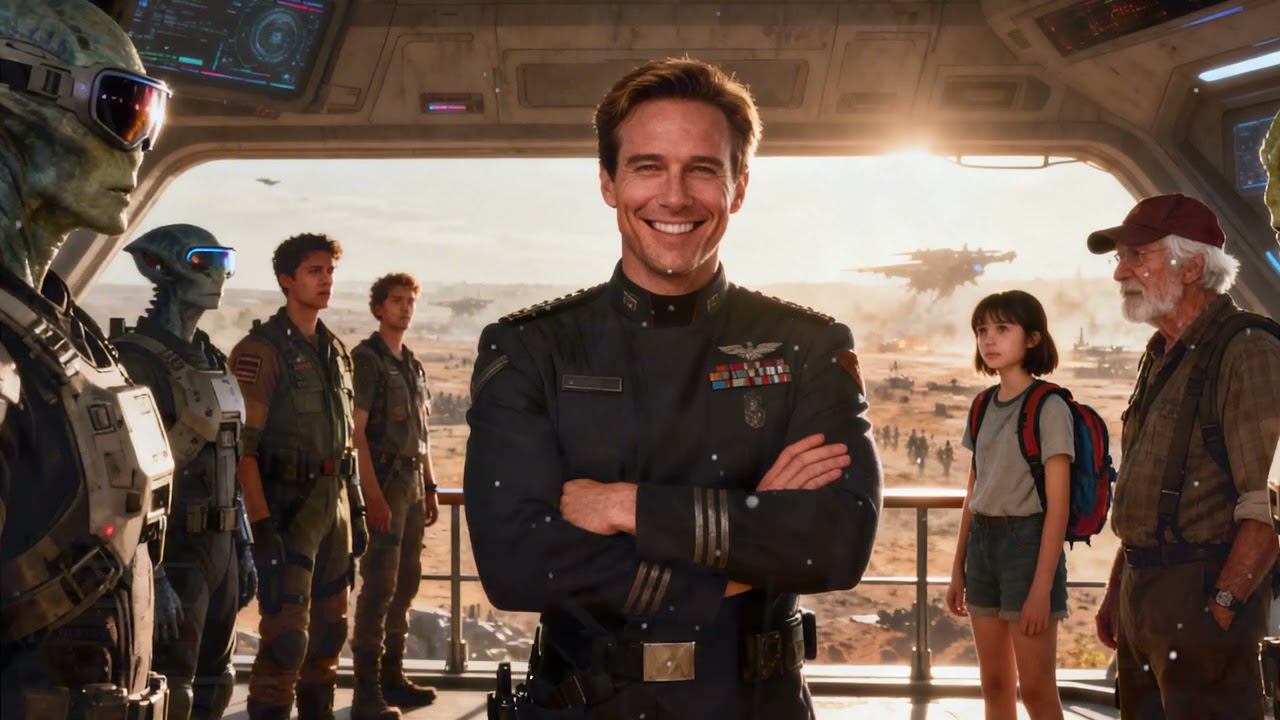
I was grinning like an idiot the whole time I read this. It’s the ultimate “okay, boomer” story. The Galactic Council, all these ancient, stuffy species, sit around in their fancy crystal chamber and vote to kick Earth out. They think they’re punishing humanity. And the human ambassador just… smiles. Says “Understood.” And walks out with her team. No speech. No anger. No threats. Just a quiet, calm exit. It’s like watching someone quit a toxic job on the spot. The council is confused at first, then smug, thinking humanity will come crawling back. But then the problems start. The rescue ships don’t come. The cheap goods vanish. The pirates get bolder. The human engineers who quietly kept everything running are just… gone. And while the council is falling apart, humanity is out past the “perimeter veil,” building a new economy from scratch. They’re selling cheap, high-quality tech to fringe worlds. They’re terraforming “uninhabitable” planets. They’re building a coalition of exiles and outcasts. The council sends a delegation to ask them to come back, and the humans just reply with a star chart of their massive new territory and a polite, “Thanks, but we’re good.” The final image of the old alien arbiter, alone in the empty chamber, realizing they didn’t just lose a species, they lost the *future*? It’s so satisfying. It’s the HFY version of “the best revenge is a life well-lived.”
Number 1. World-Building Vibe Check: 9 out of 10
The contrast is stark and brilliant. You have the decadent, static, overly-polite council world, with its ancient traditions and rigid “harmonious stasis.” Then you have the gritty, fast-moving, chaotic human frontier. The story does a great job of showing how the council’s strength—its stability—is also its weakness. The human side feels alive, messy, and full of potential.
Number 2. Character Cred: 8 out of 10
The human ambassador, Elena Vasquez, is a stone-cold icon. Her quiet smile and single word, “Understood,” define her. The alien arbiter, Verthal, is a fantastic antagonist. He’s not evil; he’s just a product of a system that stopped evolving. Watching his smug certainty crumble over the years is a joy. The story is more about groups and movements than individuals, but the main characters serve their purpose perfectly.
Number 3. Xeno-Biology Integration: 3 out of 10
This one is almost entirely socio-political. The aliens are diverse in description—crystalline, feathered, scaled—but their biology isn’t the point. The point is their culture, their economics, and their crippling fear of change. The “biology” is in the way the human diaspora functions like a decentralized, resilient organism.
Number 4. Dialogue Drip: 9 out of 10
It’s all about the quiet lines. “Understood.” “Thanks, but we’re good.” “Send us your engineers, your artists, your dreamers.” The council’s formal pronouncements sound hollow and pompous next to the humans’ casual, direct language. The most powerful line might be the human trader’s final words to a fringe merchant: “Out there, past where your maps end.” It’s simple, but it’s an invitation to a whole new world.
Number 5. The Xeno-WTF Meter: 7 out of 10
The “WTF” is slow-burn. It’s not a sudden shock; it’s the dawning horror on the council’s faces as their economy crumbles and their ships fail. The moment they see the star chart of the human “perimeter” and realize it’s bigger than their entire protected zone is the ultimate “WTF” moment. They didn’t just lose; they were left behind.
Number 6. The “Hold My Beer” Quotient: 10 out of 10
This whole story is one giant “hold my beer” aimed at the entire galactic establishment. The council says, “You’re kicked out.” Humanity says, “Hold my beer, we’re going to build a better galaxy without you.” And then they do it. They don’t fight; they *compete*. They out-build, out-trade, and out-live the old empires. It’s the ultimate economic and social flex.
Number 7. Action & Escalation: 7 out of 10
There’s no traditional action. The conflict is economic, political, and social. The escalation is in the mounting problems for the council—the pirate attacks, the food shortages, the AI fragment. The humans’ action is their patient, relentless expansion. The tension comes from watching two systems, one stagnant and one dynamic, play out their competition to its inevitable conclusion.
Number 8. Narrative Gut-Punch: 7 out of 10
The emotional weight comes from the loss of potential. The council didn’t just lose a member; they lost their chance to be part of something new. The final image of Verthal alone in the chamber, admitting “You were right,” is a gut-punch for the alien perspective. For humanity, the emotional core is the freedom—the grin of the ambassador as she walks away is pure catharsis.
Number 9. Endgame Payoff: 10 out of 10
The payoff is perfect. The council’s greatest threat, the AI, is on the verge of consuming them. They have no choice but to ask for help. And humanity’s response? “Send us your engineers, your artists, your dreamers. We will teach them how to build something that lasts. But the council, as it was, that chair is gone.” It’s not a surrender; it’s a merger on human terms. The old world ends, and a new one begins.
Number 10. The Overall “HFY!” Factor: 9.8 out of 10
This is a top-tier HFY story. It’s not about winning a war; it’s about rendering the war obsolete. It’s about the power of innovation, freedom, and sheer stubbornness to create a better future. It’s the ultimate underdog story, where the underdogs don’t just win, they make the old game irrelevant and start a new one. The grin at the end is for all of us.