
Table of Contents
No Species Can Dual Wield | The Human Girl Grabbed Two Swords
Video Courtesy of – Starbreakers HFY
Video URL – “No Species Can Dual Wield” | The Human Girl Grabbed Two Swords
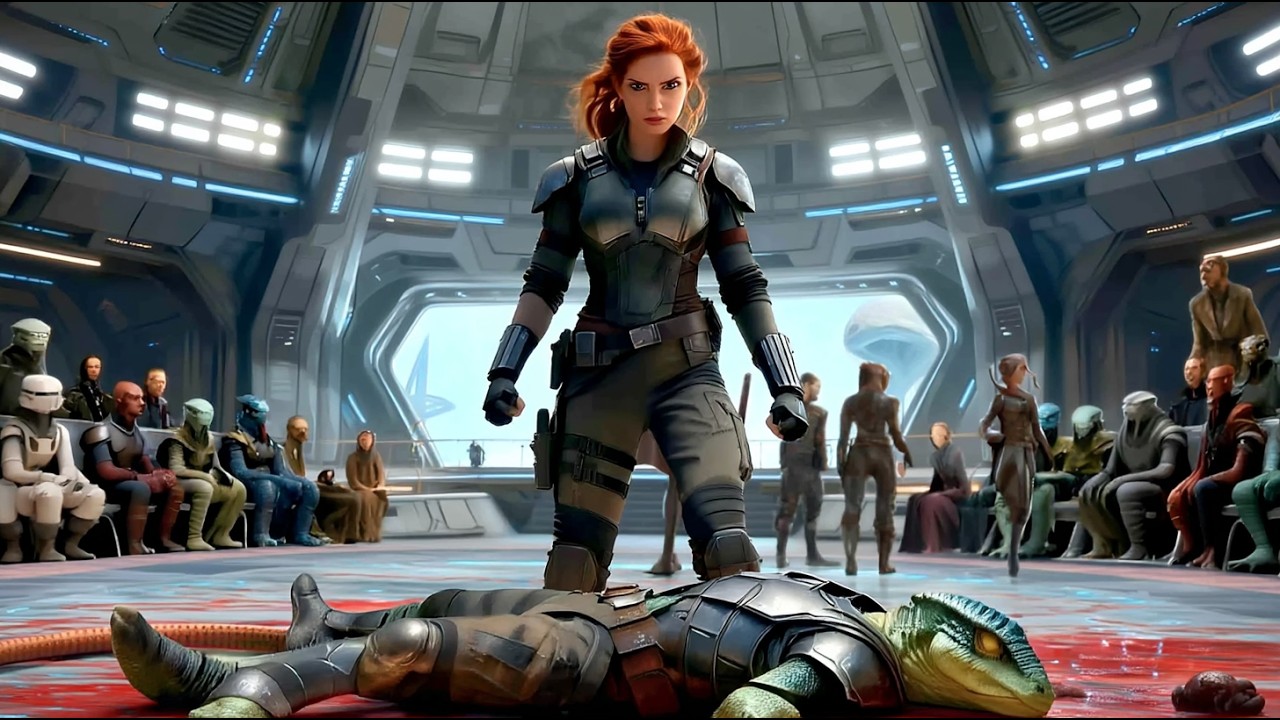
This story is like watching a martial arts movie where the quiet, unassuming new student absolutely schools the arrogant master, and I am so here for it. It starts with this alien commander, Vextor, giving a whole lecture about how dual-wielding is biologically impossible for any species because of how brains work. He even makes a Quellin kid with four arms try it, and he fails, just to prove the point. I was nodding along, like, “Yeah, makes sense.” Then a tiny human girl named Kira shows up. She looks like a kid who got lost on her way to school. My first thought was, “Oh, they’re gonna eat her alive.” But then she talks back to the academy bully, and I’m like, “Okay, she’s got guts.” Then weapon selection day comes, and she grabs two swords. I literally felt my stomach drop. She’s about to get humiliated. But then she starts moving. Her hands are doing two completely different things at the same time, and my brain just broke. It’s like watching someone pat their head and rub their stomach, but with swords, and they’re fighting three training dummies at once. The alien instructor’s eyes go wide. The narrator, a four-armed alien who *knows* it’s impossible, is just flabbergasted. Then we get the science: human brains have two hemispheres that can operate semi-independently. We’ve been doing it for thousands of years with things like playing piano. The “Hold My Beer” moment is when she challenges the undefeated combat champion and beats him without breaking a sweat. The vibe is pure “the new kid is actually a prodigy,” and the twist is that it’s not just her; it’s her whole species. We’re not special, we’re just built different. It’s a fantastic exploration of how humanity’s unique neurology could be our greatest weapon, and it’s told through a character who is just so effortlessly cool.
Number 1. World-Building Vibe Check: 9 out of 10
The Galactic Combat Academy is a great setting. You get the sense of a long-established, rigid institution with centuries of combat doctrine that everyone accepts as fact. The different species, with their various biological advantages, are described just enough to make the world feel alive. The story does a fantastic job of establishing this “universal truth” about combat, only to have a single human girl shatter it. It’s a classic “the old guard vs. the new challenger” scenario on a galactic scale.
Number 2. Character Cred: 10 out of 10
Kira O’Malley is an instant icon. She’s calm, confident, and has that subtle smirk that tells you she knows something you don’t. She’s not arrogant, just quietly certain. The narrator, Rith, is a perfect foil: smart, observant, and genuinely humbled by what he sees. Even the “villain,” Kroven, gets a great arc, going from a bullying champion to a student who wants to learn. The characters are all well-drawn and serve the story perfectly.
Number 3. Xeno-Biology Integration: 10 out of 10
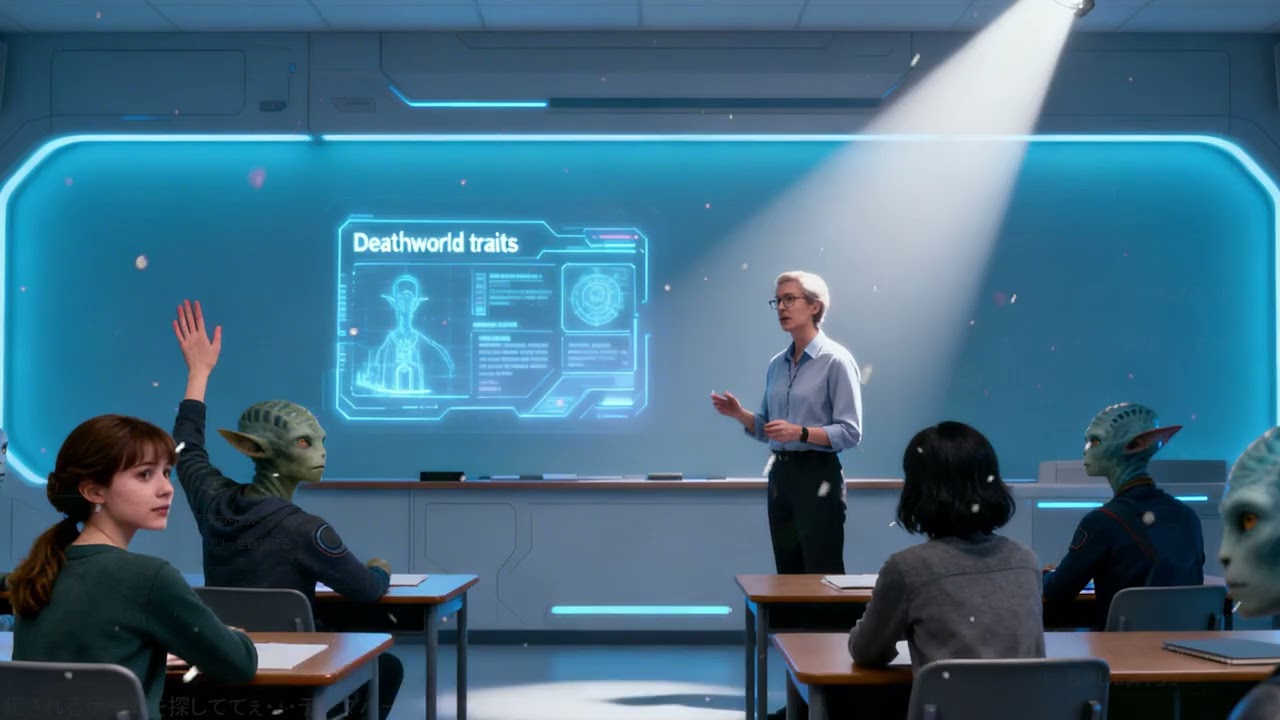
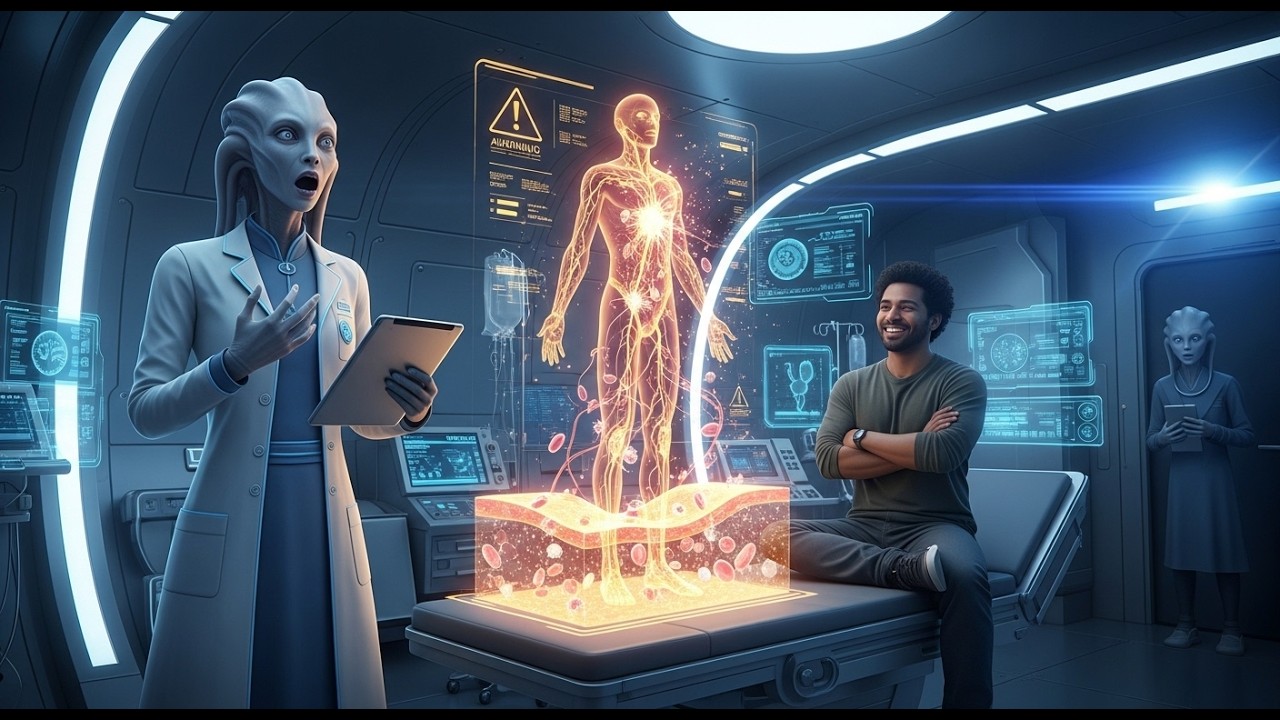
This is the core of the story. The whole plot hinges on the biological difference between human and alien neurology. The aliens have a unified brain that can only do one thing at a time. Humans have a corpus callosum with 250 million more neural fibers, allowing for true parallel processing. It’s not magic, it’s just evolution. The scene where the alien doctor explains it all with a hologram of the human brain is a brilliant piece of sci-fi storytelling. It makes the human ability feel real and grounded.
Number 4. Dialogue Drip: 9 out of 10
The dialogue is sharp and witty. Kira’s comeback to the bully, “They sent you a mirror,” is perfect. The narrator’s internal monologue is hilarious, full of disbelief and wonder. The exchange where Kira asks, “When are you demonstrating this?” and the alien says, “Next week. Want front row seats?” is just a great character beat. The dialogue does a fantastic job of showing the aliens’ shift from condescension to respect to outright fear of human potential.
Number 5. The Xeno-WTF Meter: 10 out of 10
The aliens are losing their minds the entire time. From the moment Kira picks up the swords, the instructor is in shock. The other cadets are whispering, “This is impossible.” The narrator, Rith, is constantly updating his mental notes. The biggest “Xeno-WTF” moment is when the doctor gives the neurological explanation and the entire room of instructors realizes they have to rewrite their entire combat doctrine. It’s a room full of seasoned military professionals having an existential crisis because of one teenage girl.
Number 6. The “Hold My Beer” Quotient: 9 out of 10
This story has a more cerebral “Hold My Beer” energy. It’s Kira’s calm, “Watch this.” It’s the act of defying a universal biological law with nothing but a pair of swords and a brain that works differently. The fight with Kroven is the ultimate example: she doesn’t just beat him, she makes his brute-force tactics look clumsy and outdated. She’s not reckless; she’s brilliantly unorthodox, and it’s amazing to watch.
Number 7. Action & Escalation: 10 out of 10
The action scenes are beautifully choreographed in the writing. You can picture Kira’s duel-wielding style as a fluid, impossible dance. The escalation is perfect: starting with the failed Quellin demonstration, then Kira’s basic forms, then the training dummies, then the fight with Kroven, and finally the reveal that she’s planning to integrate all species’ combat styles. The tension builds beautifully, and each action sequence tops the last.
Number 8. Narrative Gut-Punch: 8 out of 10
The emotional weight here is less about tragedy and more about the excitement of discovery and the humbling of arrogance. The gut-punch is the realization for the aliens that they’ve been training humans wrong this whole time, treating them as if they were like everyone else. The scene where the instructors realize their entire framework is flawed is a powerful moment. It’s a narrative gut-punch of perspective, showing that our limitations are often just our own lack of imagination.
Number 9. Endgame Payoff: 10 out of 10
The payoff is the alien commander ordering an emergency assembly and admitting they have a “problem,” which is actually an “opportunity.” Kira is made an instructor. She’s going to revolutionize their entire combat system. The final scene with the narrator, Tark, and Kira discussing her next “impossible” project is the perfect ending. It shows that this isn’t a one-off event; it’s the beginning of a new era, with humans at the forefront, questioning everything.
Number 10. The Overall “HFY!” Factor: 10 out of 10
This is a top-shelf HFY story because it’s not about physical strength or advanced tech; it’s about the structure of the human brain. It’s about our unique ability to do two things at once, to parallel process, to think in ways other species can’t. It’s a celebration of human neurology and adaptability. It’s smart, it’s fun, and it makes you feel proud to have the weird, complicated, beautifully inefficient brain that we do. It’s a fantastic, character-driven HFY tale.