
Table of Contents
The Council Declares War on Humanity — Her Only Reply: “Finally.”
Video Courtesy of – Sci-Fi Infinity War
Video URL – The Council Declares War on Humanity — Her Only Reply: “Finally.”
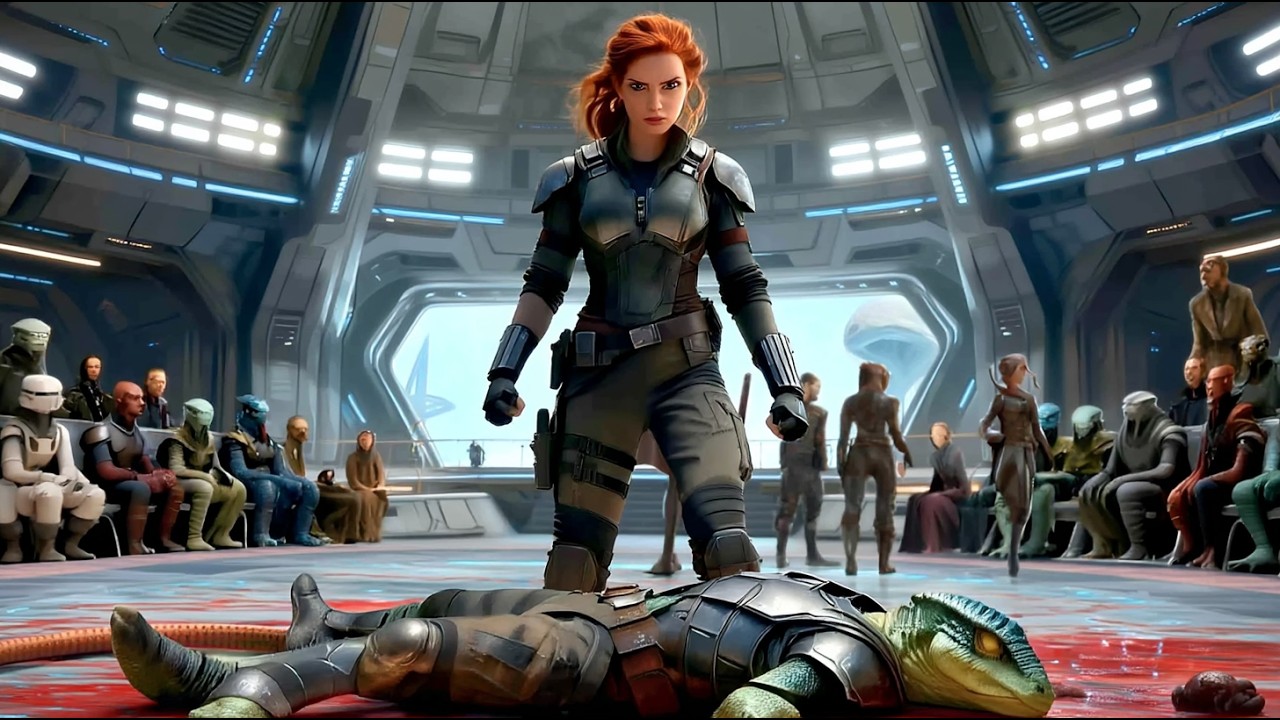
Okay, so this one is less about explosions and more about psychological warfare, and I loved every second of it. The hook is that single word: “Finally.” The alien council, all pompous and ancient, declares war on humanity expecting fear, and the human delegate just looks relieved. The vibe is like watching a master chess player who’s been waiting for their opponent to make a move. Commander Mara Voss is a stone-cold icon. She just sits there, calm, while the council trips over themselves trying to figure out why she isn’t scared. And then it all starts to unfold. The alien armada walks into a “safe corridor” that isn’t safe at all. Their weapons stop working. Their supply depots go dark. It’s not a battle; it’s a systematic dismantling of their entire empire’s credibility. I was leaning forward the whole time, my hands gripping my chair. The idea that we spent decades preparing for this, not with just a fleet, but by learning how to break their entire system from the inside out? That’s the good stuff. If you love stories where the underdog turns out to be the one holding all the cards, you need to watch this.
Number 1. World-Building Vibe Check: 9 out of 10
The council chamber is perfect—cold, ancient, arrogant. The scale of their bureaucracy and their power is palpable. But you also feel the cracks, the fear behind the polished facade. The story builds a galaxy on the edge of a revolution beautifully.
Number 2. Character Cred: 10 out of 10
Commander Mara Voss is an instant classic. Her calm under torture, her precise words, her understanding of alien psychology—she’s the weapon. The Speaker is a great villain, a bureaucrat whose power evaporates when the illusion of control is shattered.
Number 3. Xeno-Biology Integration: 7 out of 10
It’s more about psychology and sociology than biology. The “trap” isn’t biological, but technological and strategic, exploiting the council’s rigid thinking. The human advantage is their adaptability and their history of internal conflict, which they’ve turned into a superpower.
Number 4. Dialogue Drip: 10 out of 10
Every line from Mara Voss is a knockout. “You think fear ends wars. It doesn’t. It only changes what people are willing to do.” “We count choices.” And of course, the single, devastating “Finally.” The dialogue is the weapon here.
Number 5. The Xeno-WTF Meter: 10 out of 10
It’s constant. The council’s confusion as their weapons fail, their fleets get trapped, their supply lines vanish. The moment a human ship casually disables an escort without destroying it? That’s the ultimate “WTF” because it shows total, terrifying control.
Number 6. The “Hold My Beer” Quotient: 9 out of 10
This is a slow-burn “hold my beer.” It’s not a single moment of reckless bravery; it’s decades of patient preparation. The “hold my beer” is the entire plan—letting the council declare war, letting them march into the trap, and then dismantling their credibility from the inside.
Number 7. Action & Escalation: 9 out of 10
The action is unconventional. The tension comes from watching systems fail, seeing the council’s confidence crumble. The “battles” are fought with physics, logistics, and information warfare. The escalation is political and psychological, making the final collapse of the council feel inevitable and earned.
Number 8. Narrative Gut-Punch: 9 out of 10
The gut-punch is the attack on Lysa. The council’s willingness to massacre a neutral world to make a point is sickening. But the human response—the rescue ships rushing in, risking everything to save civilians—is the emotional core that turns the galaxy against the council.
Number 9. Endgame Payoff: 10 out of 10
The payoff is the total collapse of the council’s authority, not through conquest, but through truth. The release of their files, the smaller species walking out, the fleets powering down—it’s a complete and total victory that feels more powerful than any battle could. They didn’t just win; they exposed the enemy for what they were.
Number 10. The Overall “HFY!” Factor: 10 out of 10
It’s a different kind of HFY. It’s about intellectual and moral superiority. Humanity doesn’t win by being the biggest bully; we win by being smarter, more patient, and ultimately, more moral. It’s the story of breaking a cage, not building a bigger one.