Table of Contents
We’re Freezing And Hungry — The Human’s Offer Changed Everything
Video Courtesy of – Galactic Chronicles
Video URL – “We’re Freezing And Hungry” — The Human’s Offer Changed Everything
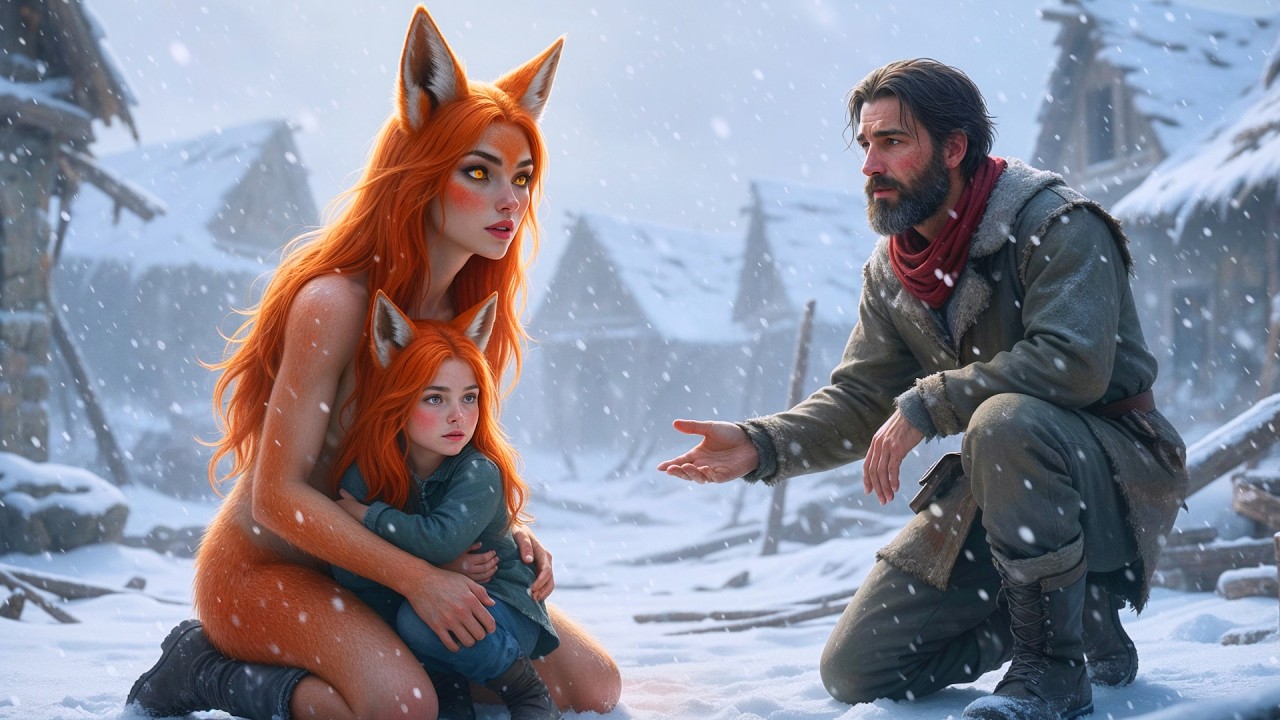
Okay, this one hit different. I was reading this and I had to stop a few times, just to, like, process. It’s not about a punch or a fleet; it’s about a door. A woman and her daughter, a Vulpine refugee, are freezing to death after a war. They knock on doors in a human settlement, and four doors close in their faces. The fifth door opens. The man, Davin, has lost his son and his wife. He’s tired. He’s broken. But he offers them shelter… for work. It’s a raw deal, wrapped in barbed wire, but it’s *something*. The story then just… watches them. Day by day, season by season. They fix the roof. They plant seeds. They don’t talk about feelings; they just work. The village talks, the authorities try to stir up trouble, but these two broken people just keep working. The little girl, Pip, starts to heal. Davin starts to laugh again. The woman, Russa, stops running. It’s a story about building something from nothing, about how the work is the therapy, and how the only way to beat the past is to stubbornly, quietly, build a future. The moment when Davin, who couldn’t even open up, tells the angry mob that he’s “too tired to hate anyone”? That’s the most powerful line. It’s not about forgiveness; it’s about exhaustion with the weight of grief. And then, years later, the three ironwood seeds she carried the whole time finally sprout. Man. I’m not crying, you’re crying.
Number 1. World-Building Vibe Check: 10 out of 10
This isn’t a galactic-scale epic; it’s a story about a farm, a settlement, and the cold. And it’s *perfect*. The world-building is intimate. You feel the weight of the snow, the warmth of the fire, the tension in the village square. The post-war setting is palpable—the lingering hatred, the economic struggles, the way grief hangs in the air. It builds a world not with spaceships, but with a broken fence and a well rope that needs replacing. That’s world-building.
Number 2. Character Cred: 10 out of 10
Russa and Davin are masterclasses in character writing. They are defined by their silences, their grief, and their actions. You see their trauma in every line, from Russa’s desperate knocking to Davin’s deadened eyes. Their relationship doesn’t bloom; it *grows*, slowly, over years of shared work and quiet evenings by the fire. And Pip? She’s the heart. A child who learned to be quiet to survive, who slowly finds her voice and her joy again. Unforgettable characters.
Number 3. Xeno-Biology Integration: 7 out of 10
The “xeno” aspect is the Vulpine species, but it’s handled as a cultural and racial difference rather than a biological one. The focus is on the prejudice and the “othering,” not on claws or fangs. It’s a smart choice; it makes the story a direct allegory for real-world division and healing. The biology is social, not scientific, and it works perfectly for this kind of narrative.
Number 4. Dialogue Drip: 9 out of 10
The dialogue is sparse, but every word matters. “We’re freezing,” Pip says. “And we’re hungry. Please.” That’s it. That’s the whole hook. Later, Davin says, “I’m too tired to hurt anyone.” The conversation between Russa and the merchant, Breida, is tense and real. The dialogue doesn’t explain; it *reveals*. It feels authentic to people who have been through too much to waste words on pleasantries.
Number 5. The Xeno-WTF Meter: 2 out of 10
This isn’t that kind of story. There’s no “WTF” moment about human biology. The “WTF” is emotional—the shock of a door opening, the shock of kindness from an enemy, the shock of a community slowly, painfully choosing healing over hatred. It’s a different kind of shock, but it’s just as powerful.
Number 6. The “Hold My Beer” Quotient: 8 out of 10
The human stubbornness here isn’t violent; it’s *persistent*. Davin’s “hold my beer” moment is when he faces down the garrison with the law book. Russa’s is when she chooses to stay and do the work. The ultimate “hold my beer” is when they decide to just… keep going. To fix the roof, to plant the seeds, to live. That’s the most human kind of defiance there is.
Number 7. Action & Escalation: 8 out of 10
The action is in the quiet moments. The escalation is not a battle, but a town meeting. The conflict builds slowly—the rumors, the garrison visit, the festival confrontation. The climax at the festival, where Davin walks into the middle of the angry mob and starts dancing with a Vulpine girl, is more powerful than any space battle. The tension breaks not with violence, but with a stubborn act of normalcy.
Number 8. Narrative Gut-Punch: 10 out of 10
This story is made of gut-punches. The image of Pip’s cold lips. The memory of the husband giving her the seeds. The line, “I’m too tired to hurt anyone.” The moment Davin says his son was 19. The final image of the three ironwood saplings, a century of work ahead of them. It’s a story that earns every emotional beat. It’s about grief, healing, and the slow, invisible work of building a life from ruins.
Number 9. Endgame Payoff: 10 out of 10
The payoff is the sapling. It’s not an explosion; it’s a tiny green shoot pushing through the soil. It’s the promise of shade for grandchildren not yet born. It’s the proof that all the work—the mending, the waiting, the forgiving—was worth it. The final chapter, with the family sitting by the fire, is a perfect, quiet ending that feels earned and true. It’s not the end of the story; it’s the beginning of a new one.
Number 10. The Overall “HFY!” Factor: 10 out of 10
This is HFY in its purest, most profound form. It’s not about being the strongest or the smartest. It’s about the human capacity to endure, to heal, and to build. It’s about opening a door when you have every reason to keep it closed. It’s about choosing to work together instead of hating each other. It’s a quiet, deeply moving testament to the fact that the most human thing we do is survive, and then help others survive. It’s beautiful.