Table of Contents
HFY HUB Score – 7.9 out of 10
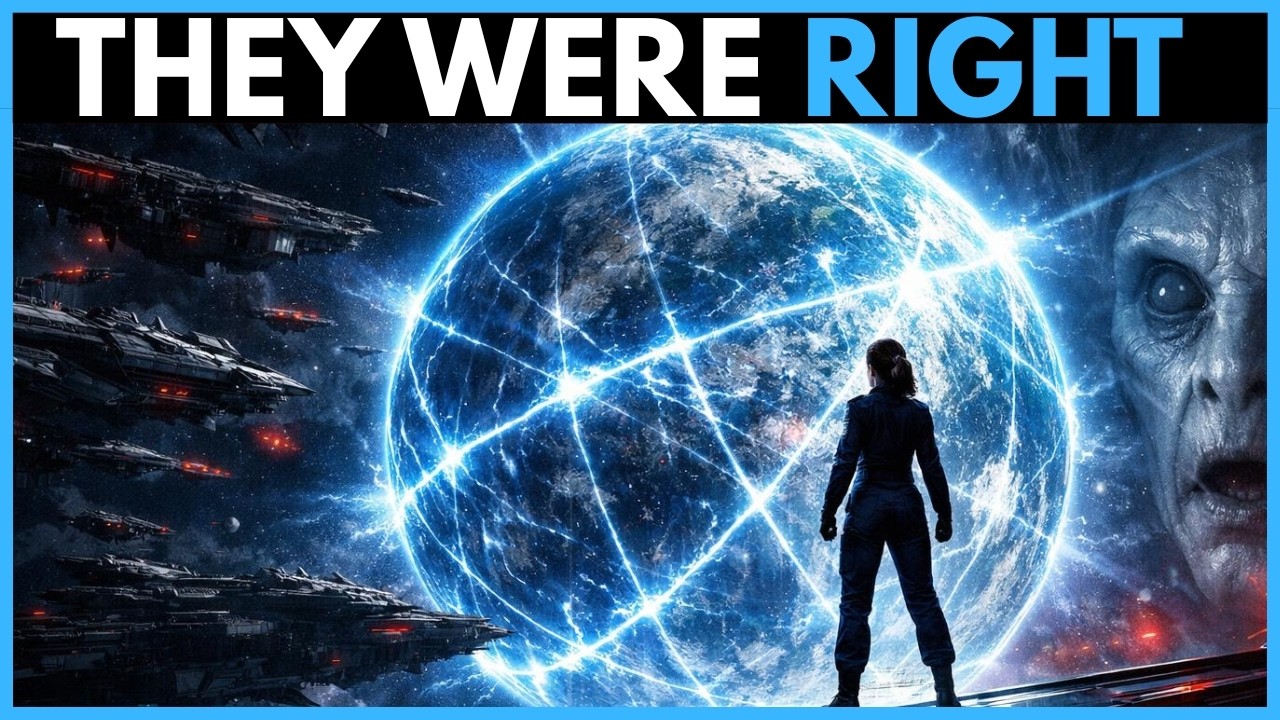
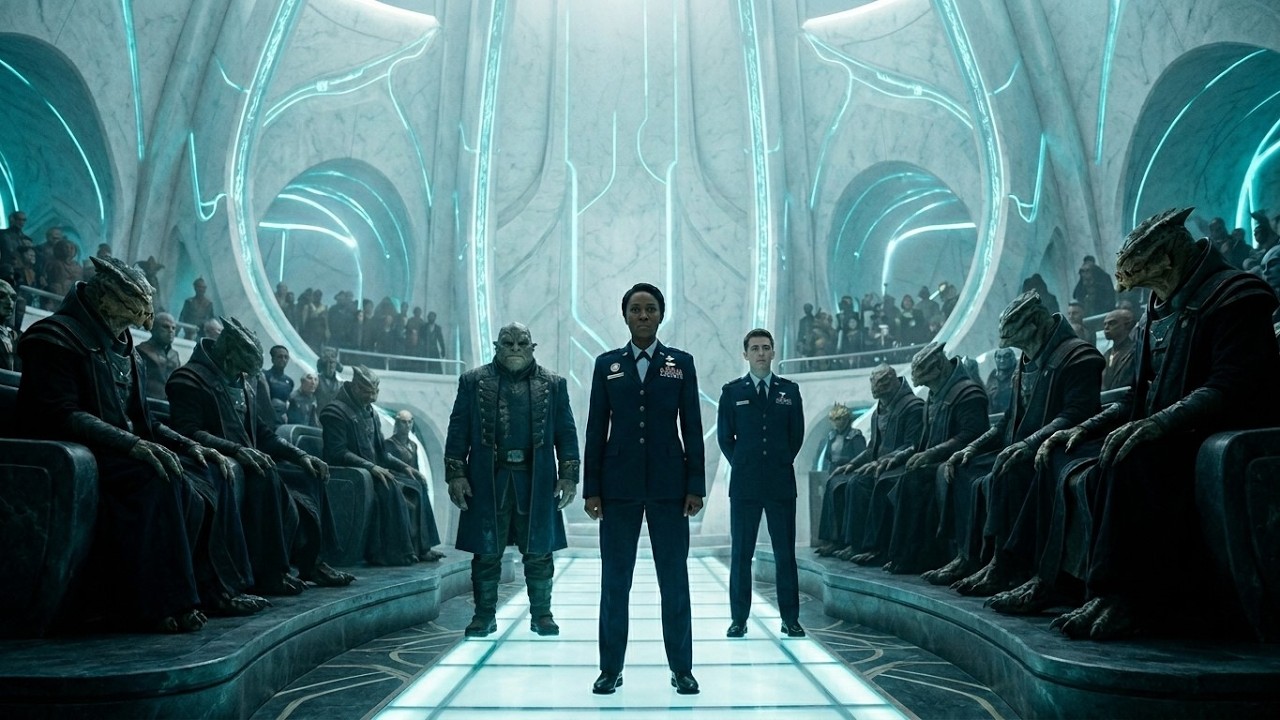
I’m rubbing my temples because this one isn’t about big explosions—it’s about bureaucracy, and somehow that’s even more tense. The hook hits at 3:47 hours when every screen on Earth goes white with the Galactic Council’s seal. Commander Yara Osei, my new favorite analyst, spots something in the Voreth language’s mandible clicks: urgency under concealment. These aliens aren’t calmly enforcing a rule, they’re rushing. And that’s where I leaned forward so fast I almost spilled my drink. The Council demands Earth shut down three outer colonies, give up 40 years of expansion, and kneel. But Yara digs into the records and finds that 39 species complied and never grew again. Two species refused and got “contained.”
Then she goes to Luna Prime, and this old woman named Abena Quayle-Cody says, “My grandmother did not cross the Atlantic in a cargo hold so that I could kneel on the moon.” I got chills, seriously. The humans don’t fight with ships—they fight with transparency. Yara proposes broadcasting the Council’s inconsistent enforcement to every species in the galaxy. And when the Voreth fleet shows up with 40 warships, Earth’s 11 ships just… stand there, broadcasting live. Three other species jump in with formal inquiries. The aliens retreat without a shot fired. This is smart HFY, the kind that makes you cheer for lawyers and analysts. If you like “humanity out-politicks the galaxy,” drop everything and watch this.
Number 1. World-Building Vibe Check: 8 out of 10
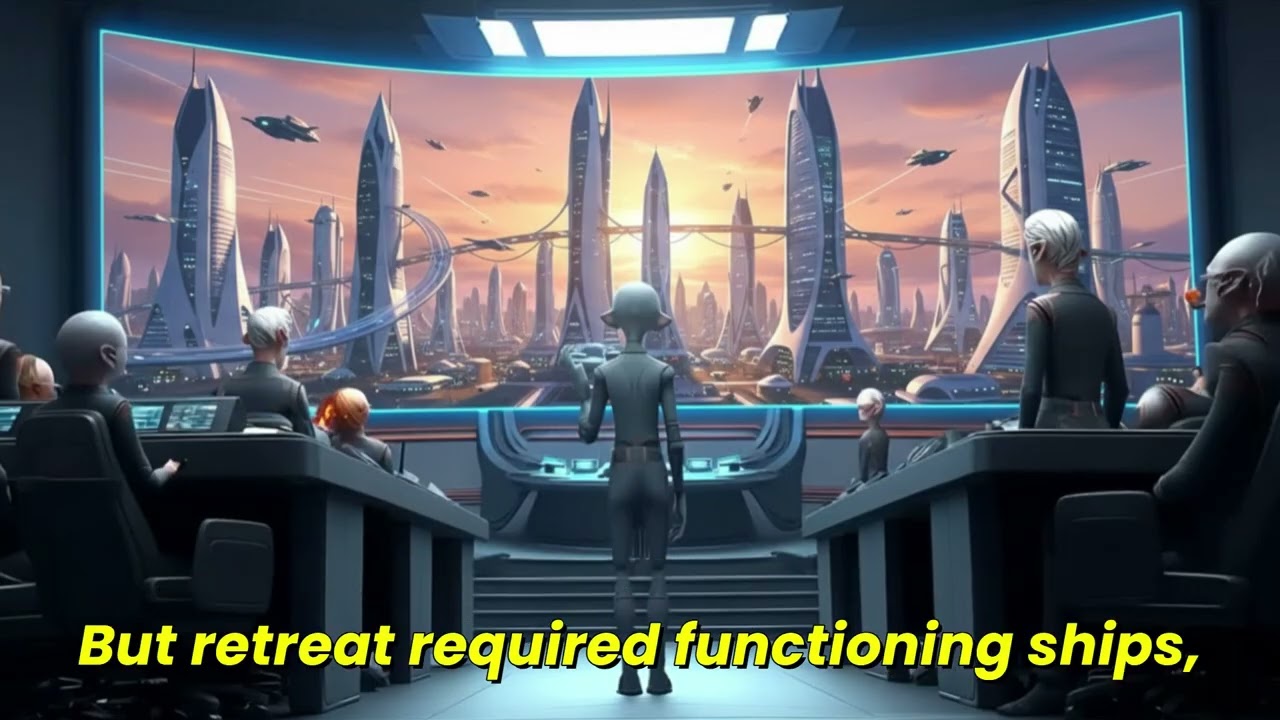
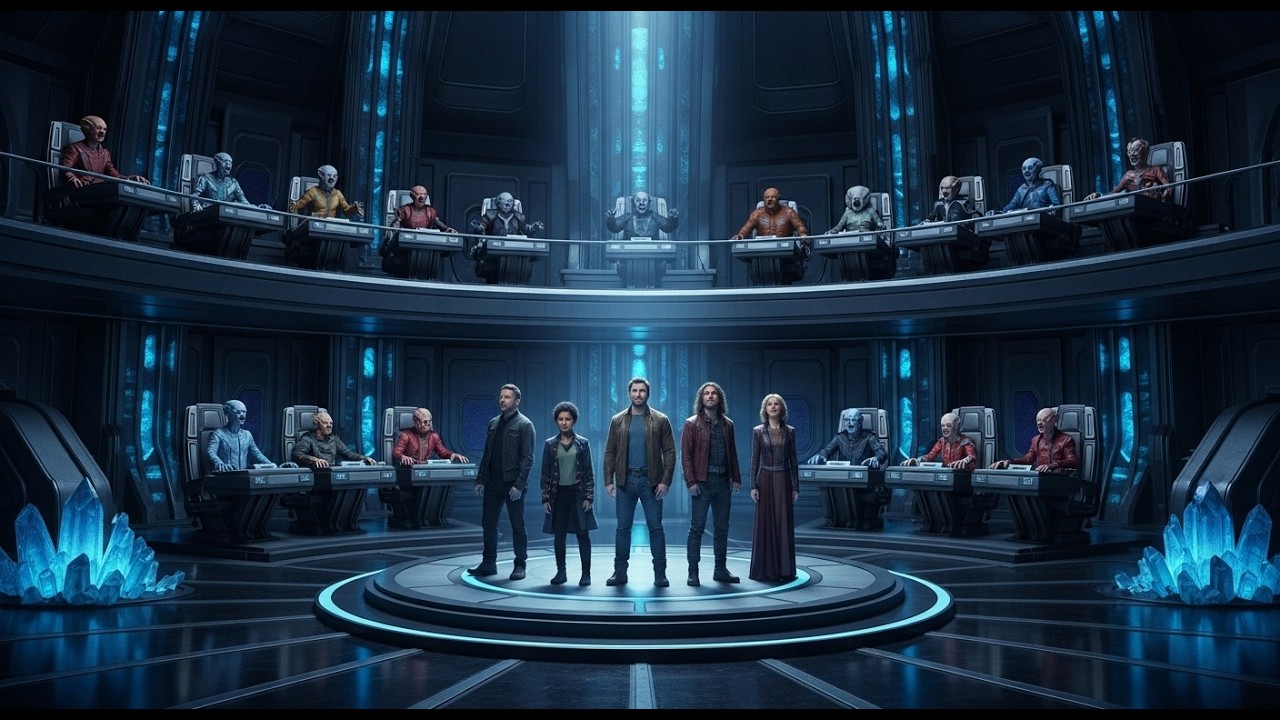
The Galactic Council feels ancient and stuffy, with 47 member species and a Regulatory Commission that’s been rubber-stamping Voreth dominance for centuries. The Voreth Hegemony itself is this bureaucratic empire hiding behind statutes. I love the detail about mandible resonance patterns—it makes the aliens feel truly alien. The only knock is that we don’t see much of the wider galaxy, but what we do see is rich and political.
Number 2. Character Cred: 9 out of 10
Commander Yara Osei is brilliant—she’s not a soldier, she’s a linguist and analyst who reads alien subtext like a book. Her determination to dig through 40 years of enforcement records, her quiet defiance in the briefing room, and her speech to the UN assembly? Fantastic. President Oliver Bright is also great—the former law professor who asks “What happens if we simply do not comply?” And Abena Quayle-Cody’s single line is worth the price of admission.
Number 3. Xeno-Biology Integration: 5 out of 10
We get some neat stuff: the Voreth have mandibles that produce resonance patterns as an emotional subtext layer, and Yara’s built a personal key to decode it. That’s clever. But the story is much more about politics and law than biology. The aliens are humanoid enough that their physical differences don’t drive the plot much. Still, the mandible stuff is memorable.
Number 4. Dialogue Drip: 8 out of 10
The line from Luna Prime—“My grandmother did not cross the Atlantic in a cargo hold so that I could kneel on the moon”—is an all-timer. Yara’s speech to the UN assembly is also great: “We are not asking the Council to break its own rules. We are asking it to apply them consistently.” And the Voreth admiral’s quiet “You are transmitting” when he realizes the humans are broadcasting everything? Chills. The dialogue is sharp, purposeful, and feels real.
Number 5. The Xeno-WTF Meter: 8 out of 10
The Voreth are not ready for humans who refuse to panic. Admiral Kethon shows up with 40 warships expecting compliance, and instead he gets a calm “Earth acknowledges your presence and respectfully declines to stand aside.” Then he learns that Earth is broadcasting his every move to the entire Council. His mandibles shift to a pattern Yara’s never seen—that’s the moment you know he’s rattled. The aliens’ shock at human stubbornness is delicious.
Number 6. The “Hold My Beer” Quotient: 9 out of 10
Instead of building a super-weapon, humanity builds a legal case. That’s a different kind of reckless, but it’s still very human. The decision to publicly broadcast non-compliance, to invite every species to examine the enforcement record, to use transparency as a weapon? That’s brilliantly unorthodox. The Voreth expected a military response or surrender. They didn’t expect a press release. I love it.
Number 7. Action & Escalation: 7 out of 10
There’s no space battle here. The tension comes from the clock ticking down, the standoff at Jupiter, and the political maneuvering. The “action” is Yara analyzing data and the fleet holding position. But the escalation is masterful: from the initial ultimatum, to the refusal to evacuate Luna Prime, to the public broadcast, to the Council observers stepping in. It’s a different kind of thriller, but it works.
Number 8. Narrative Gut-Punch: 8 out of 10
The emotional core is the people of Luna Prime who refuse to leave. George Adler, the miner who says “That’s not a law being enforced, that’s a door being shut.” Abena Quayle-Cody and her grandmother’s journey. These are ordinary people who’ve decided that home is worth more than safety. When Yara says “They had each independently watched the same transmission and arrived at the same conclusion,” I felt that. It’s quiet, but it hits hard.
Number 9. Endgame Payoff: 8 out of 10
The fleet retreats without a shot. The Voreth admiral says the matter will be referred to the commission, and then his ships jump away. It’s anticlimactic in the best way—because the humans won by refusing to play the alien’s game. The final scene with Vreth in the Geneva cafe, where he explains that the Council reads human history because we refuse to accept ceilings, is a perfect capstone. The payoff is intellectual, not explosive, and I respect that.
Number 10. The Overall “HFY!” Factor: 9 out of 10
This is HFY for people who love diplomacy, legal loopholes, and the power of saying “no” in public. It proves that humanity’s greatest weapon isn’t a bomb—it’s our stubborn refusal to kneel, backed by receipts. The Voreth’s fear that we’re a civilization that doesn’t believe in ceilings is exactly the right note. It’s not my usual action-packed fare, but it’s so smart and satisfying that I can’t give it less than a 9.
HFY HUB Score – 7.9 out of 10
Video Courtesy of – TheLastArchivist HFY
Video URL – The Galactic Council Ordered Earth to Kneel—Humanity Stood Up